
As fall brings shorter days and changing road conditions, businesses with employees behind the wheel should take time to address seasonal driving risks. Deer activity increases during this period, especially around sunrise and sunset, when reduced visibility can make an unexpected roadway crossing more dangerous.
For a business that depends on cars, vans, trucks, or other commercial vehicles, a deer collision can mean more than repairs. It can lead to employee injuries, missed appointments, delivery delays, disrupted schedules, and costly downtime. At Stratford Insurance, we encourage Massachusetts businesses to reinforce safe driving habits and review their commercial auto protection before deer activity reaches its seasonal peak.
Why Deer Collisions Increase During the Fall
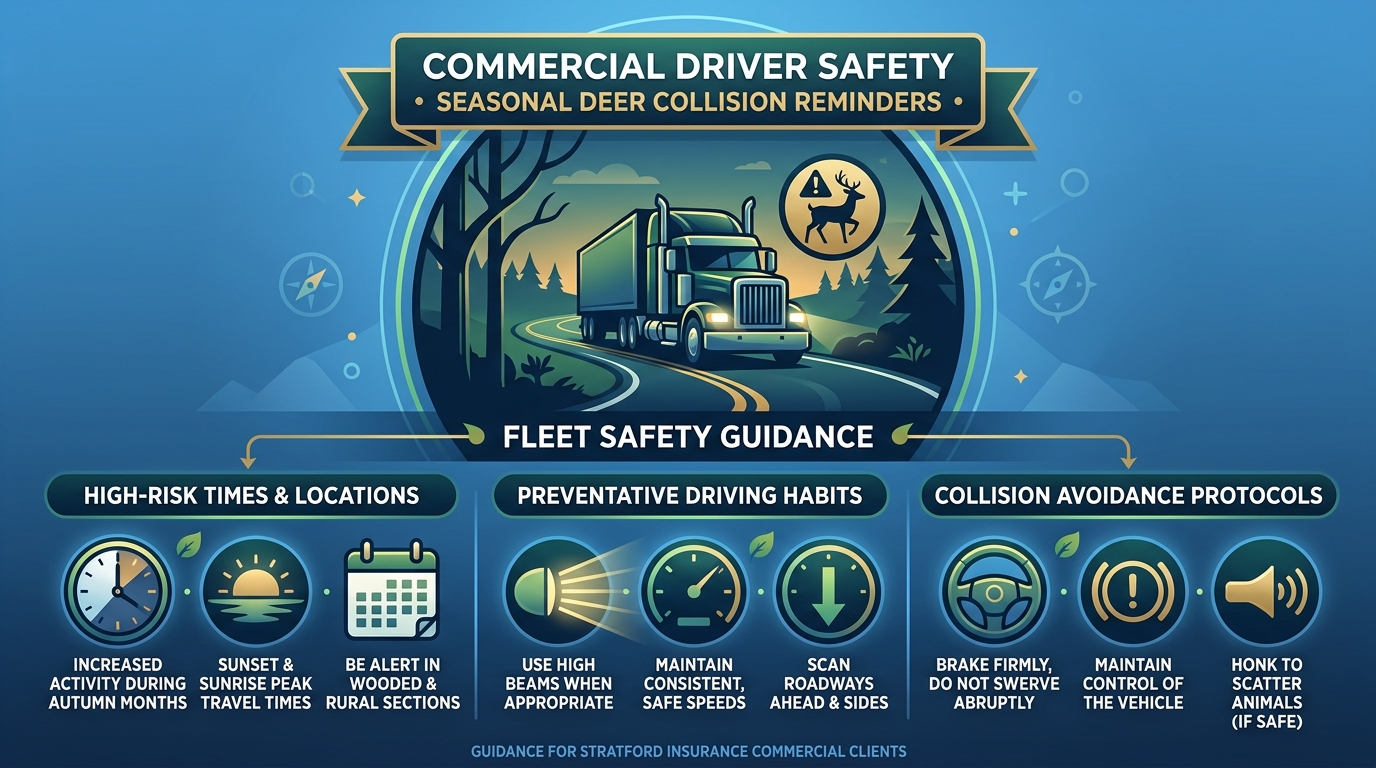
Deer are more active as the seasons change, making October through December an especially important time for drivers to remain aware of their surroundings. Early morning and evening are common times for deer to move, which can increase the likelihood of sudden crossings when light is limited.
Extra caution is important on rural roads, near wooded areas and open fields, and wherever deer-crossing signs are posted. Familiar routes can still become hazardous during deer season, so drivers should treat every trip with appropriate awareness.
Keep Drivers Focused on the Full Roadway Environment
One of the best ways to lower the risk of a deer-related accident is to look beyond the lane directly in front of the vehicle. Deer can emerge quickly from tree lines, ditches, medians, fence rows, and roadside brush.
Employees who make service calls, travel between job sites, or spend long shifts on the road should reduce distractions and give added attention to the road at dawn and dusk. Staying engaged with the full driving environment gives a driver more time to notice movement and react appropriately.
Slow Down in Areas With Higher Deer Activity
Vehicle speed has a direct effect on how much time a driver has to respond to a hazard. Reducing speed in places where deer are frequently present gives commercial drivers more room to identify a risk, brake in a controlled way, and maintain control of the vehicle.
Driving at or below the posted speed limit can provide the extra seconds needed when a deer enters the road unexpectedly. For a commercial vehicle, those few seconds may help prevent a more serious loss.
Assume Other Deer May Be Nearby
Seeing one deer cross the road does not necessarily mean the danger has passed. Deer often travel together, and another animal may enter the roadway moments after the first one.
Drivers should continue looking along both sides of the road after a deer disappears from view. This is particularly important for operators of trucks, vans, trailers, and vehicles transporting equipment, inventory, or passengers, since larger vehicles typically need more distance to stop safely.
Use High Beams When It Is Safe to Do So
Visibility is especially important as daylight becomes more limited. When there is no oncoming traffic and conditions allow, high beams can help drivers see farther down the road and potentially spot deer sooner.
Better lighting does not guarantee that a deer will move away from the roadway. A startled deer may stop or hesitate, so drivers should be ready to brake while remaining aware of nearby vehicles and road conditions.
Brake in a Controlled Manner Rather Than Swerving
A driver’s immediate reaction when a deer appears may be to steer around it. However, swerving out of the travel lane can create a more severe hazard than the animal itself.
A sudden maneuver can lead to a collision with another vehicle, a tree, a guardrail, or oncoming traffic, or it can send the vehicle into a ditch. In most situations, controlled braking while remaining in the lane is the safer response because it helps the driver retain control.
Know What to Do After a Deer Collision
Even careful drivers cannot avoid every wildlife collision. Businesses should make sure employees understand the steps to take if an incident occurs, so they can prioritize safety and follow company reporting procedures.
If it is safe to do so, the driver should move the vehicle out of harm’s way before checking for injuries. Emergency medical help should be requested when needed, and local law enforcement should be contacted as appropriate.
Drivers should not approach an injured deer, as a wounded animal may react unpredictably. They should photograph vehicle damage and record key details about the incident while the information is still fresh, then report the loss according to the company’s established process.
Review Commercial Auto Coverage Before Deer Season Peaks
Fall is also a useful time to review commercial insurance coverage for company vehicles. In many cases, damage from striking a deer or other animal is handled under the comprehensive portion of a commercial auto policy rather than collision coverage. A business carrying liability-only coverage should understand that its own vehicle damage is generally not included.
In addition to reviewing coverage, businesses may wish to revisit vehicle schedules, deductibles, driver-reporting procedures, and claims expectations. Preparing before an incident can reduce uncertainty and help operations continue more smoothly after an accident.
As an independent insurance agency in Middleton, Massachusetts, Stratford Insurance helps businesses throughout the North Shore evaluate commercial insurance needs with personalized insurance guidance. We work with trusted insurance carriers to help identify tailored insurance coverage that supports your vehicles, employees, and operations. Contact Stratford Insurance to review your commercial auto policy and prepare your business for the road ahead.
Deer Collision Reminder - Safety Tips - Commercial

A fall insurance checklist for Massachusetts homes, vehicles, and small businesses

Rise in Ransomware Attacks
Fall Prep Tips for Residential Properties
Fall Prevention Awareness Month - Sept. - Tips for Businesses

Cyber Insurance for Businesses: What You Need to Know
Risk Management in Construction Projects
Commercial Umbrella Liability
Does Auto Insurance Follow the Car or the Driver?
When Business Growth Outpaces Insurance Coverage

Boat Liability Risks Most Owners Don’t Think About
Essential Workplace Heat Safety Tips for Hot Weather

Smart Insurance Tips for Protecting Your Summer Vehicles

The Hidden Dangers Small Businesses Face When Underinsured
Staying Safe Behind the Wheel During Distracted Driving Awareness Month

Spring Maintenance Tips for Commercial Properties

Smart Add-Ons That Strengthen Your Commercial Insurance
8 Common Insurance Myths That Could Leave You Unprotected
Spring Safety Tips for Commercial Drivers

Spring Construction Insurance Essentials for Contractors
Why Commercial Umbrella Insurance Is Crucial Today
Understanding Business Interruption Coverage

Secure Your Holiday Joy: Protect Valuables with Insurance
Winter Prep for Commercial Properties

Essential Winter Preparation Tips for Homeowners

Fall Event Liability: Protecting Your Business This Season
8 Smart Strategies to Prevent Jobsite Theft & Vandalism
Deer Collision Safety Tips for Fall Travelers

Embrace Fall with These Essential Safety Tips
Child Passenger Safety: Tips for Safe Car Seat Installation

100 Days Left: Essential Commercial Insurance Check

100 Days Left: Your Personal Insurance Checklist

Insurance Essentials for Safer Construction Projects

Navigating Insurance Needs for College Students

Contractor License Bonds: A Key to Success and Compliance
National Traffic Awareness Month: Enhancing Trucking Safety

Demystifying Commercial Property Insurance Responsibilities

Important Insurance Tips for Hiring Summer Workers

Does General Liability Cover 1099 Workers?

Three Essential Insurance Tips for New Homeowners

Summer Home Prep: Upgrade and Protect Your Property

Summer Prep Tips for Commercial Properties
Understanding Auto Insurance: Protecting Against the Unexpected
